
“My child receives private riding lessons after school. What about your child?”
“I pay for extra math tutoring for my boy, and the tutor is very well regarded!”
“But my daughter can speak Japanese, French, and Spanish, and she is only 15 years old.”
It’s somewhat exaggerated, but that is exactly how the Chinese barista Maggie presents it as we sit in her café in Chongqing, talking about the pressure young people in China live under.
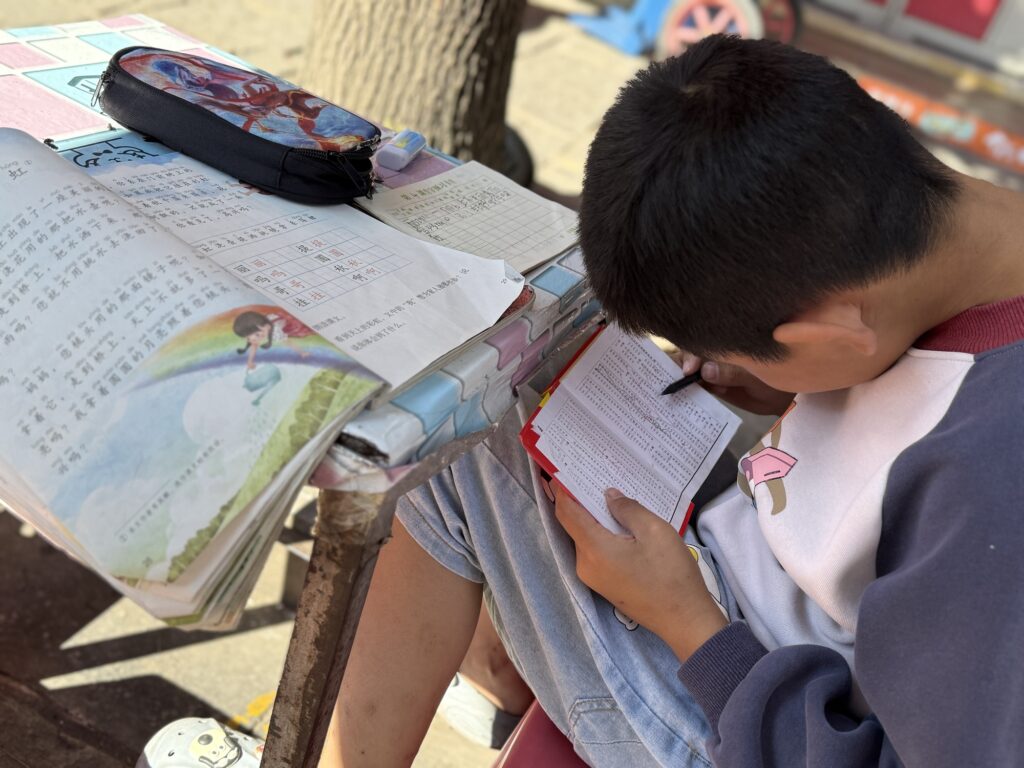
A pressure they do not experience as coming primarily from the state, the school, or their friends, but from their own mother and father. While they are at school from morning to evening, their parents compete with one another over whose children are performing best.
But it is not only the children’s academic success that parents use to measure and weigh their status among other parents. It continues beyond the classroom as well: Is your daughter thin enough? Is she married, and does she have a husband and child? Do they live in the nice part of town, and do they have a lot of money?

Am I Worth Anything at All?
I almost lose my breath as Maggie lists all these parameters that the majority of young people in China have to juggle.
“Both my nephew and niece have suffered from depression because they feel they cannot live up to the expectations their parents have of them,” Maggie explains.
Her nephew was never happy at school and did not get good grades. He was not someone his parents would boast about.
“Am I worth anything at all?” he asked himself as he lay under the covers, not going to school that day either.
Unfortunately, that question is far from uncommon for young Chinese people to ask themselves, Maggie assures me.

Will Mom and Dad Ever Be Satisfied?
Unlike Maggie’s nephew, her niece is a model student at school. She speaks several languages, and her parents boast about her every chance they get. And because she is so talented, she is, of course, expected to apply to the country’s best university. At least that is what her parents, in collaboration with her teachers, have decided. Meanwhile, she lies awake at night, stressed and afraid that she is too overweight for anyone to find her attractive.
It is also important that she finds a husband from a well-off family so that her future child will have the best possible conditions for a successful career.
There is, in other words, a great deal of activity at the parents’ planning table. The success of several generations must be mapped out so the family can continue to walk through the city with chests lifted and heads held high.
But the competition fills the air so heavily that the young person can neither breathe nor envision a future where they do not have to worry about disappointing their parents. If that happens, they reduce not only themselves but the entire family to nothing.

More Is Never Enough …
… whether things are going well or badly at school, at work, or in their love life, Maggie emphasizes.
“I am 38, unmarried, and therefore useless. When my former boyfriends started talking about getting married, I would feel physically unwell,” Maggie says, and continues:
“I neither want to get married nor have children. You cannot be yourself when you are married and have a child. You just work for the family, and having a child is far too much work.”
That is how Maggie concludes, though she does mention that her nephew and niece are now happy and “have found themselves.” Her nephew chose to go against the grain, drop out of school, and start working as a ski guide. Her niece chose to move to Canada, where she now has both a job and her own family:
“After just one day at the new school in Canada, she called home and told her mother that she had been healed. The school grew its own crops and taught the students home economics.”
So it did turn into a happy ending for Maggies two family members — but only because they had the courage to talk to their parents and gain their support to take a different path.
Not everyone is that “lucky,” Maggie explains.
Below you can watch the full interview with Maggie: