
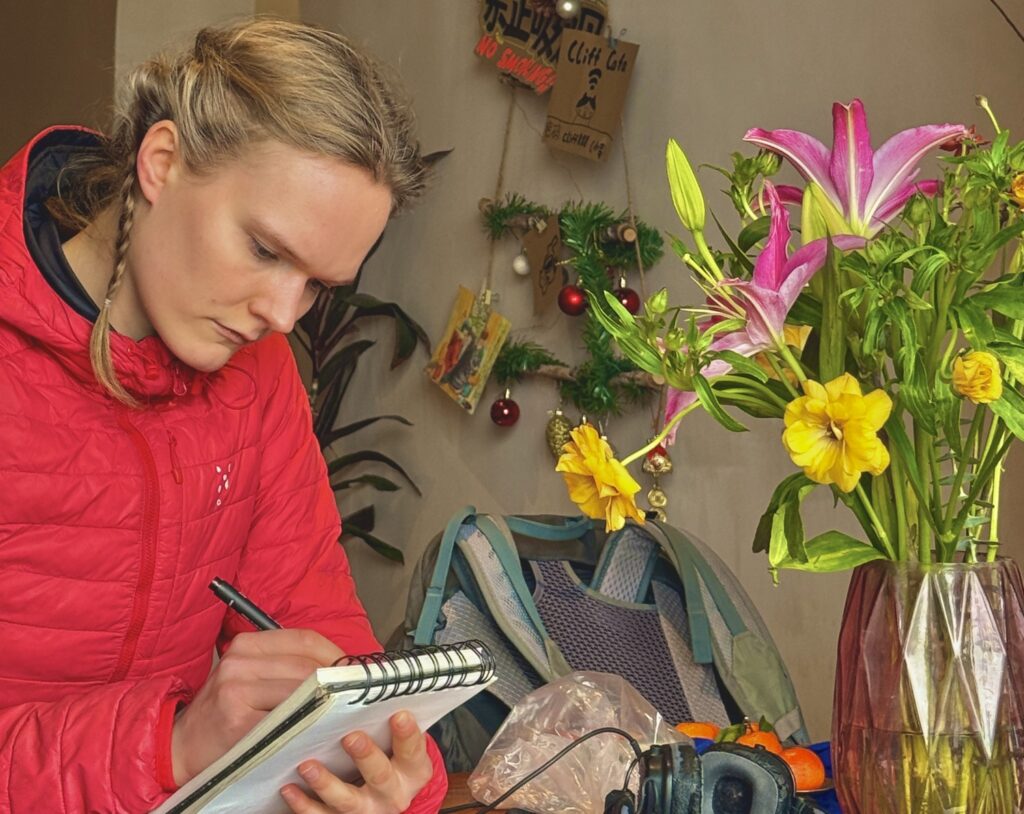
For me, a journey is about staying. At first glance, that may sound contradictory. But it is only when I remain in one place for a longer time that I begin to feel the pulse of the culture, the people, or the nature I move within. Only then does something inside me shift from one place to another. Only then do I truly travel.
Every day, planes take off and land filled with travelers. Where are they headed? Some are going on a two-week island-hopping trip in Thailand, others are backpacking for three weeks through Peru, Brazil, Colombia, and Ecuador. And some are spending a week in Iceland to take a few beautiful photos in a lagoon.
But what is it all really worth when the plane lands in your home country again? There are many possible answers to that question. Yet even if one Buddha after another was checked off the list, along with many other experiences, was that really what moved something inside you?
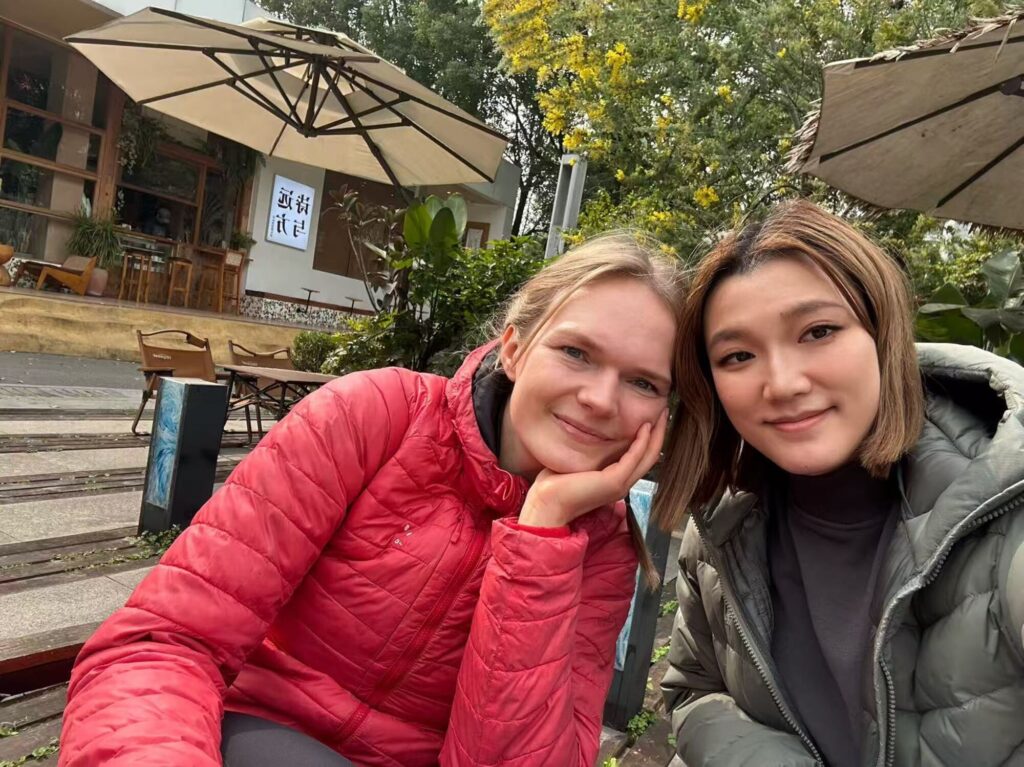
You travel when you move.
But when do you actually move the most? Is it when you physically rush around to visit as many sights as possible, taking the direct route with the tourist bus or the local guide in order to get the most out of the experience?
Or is it when you take a detour?
And by detour I mean not rushing on to the next destination when the guidebooks tell you that you have experienced everything there is to experience in this city. Because if you truly want to go out into the world and have an experience that shifts something within you, you must lift your head from your phone, look the locals in the eyes, and create contact.
Creating contact and connections with others requires time, a great deal of energy, and determination.
It takes time to learn the public transport system, energy to understand how everyday life abroad is different, and determination to question it.
All answers can be found in a matter of minutes.
So why make life difficult when you have only set aside three days to stay in a place? With a snap of your fingers, TikTok or Google can quickly help you find the best dumplings in town, or explain how a Chinese person manages on four hours of sleep, or why they smack and slurp so much when they eat.
I believe the answer speaks for itself, and if not, listen to Albert Einstein:
“Anyone who has never made a mistake has never tried anything new.”
I remember this quote hanging above the exit to the science wing when I was in high school. Science was not my strongest subject. Those words therefore gave me the drive to keep working hard, even though the many reaction diagrams required a great deal of my time, energy, and determination to learn. I made many mistakes, and asked just as many questions.
But when I finally graduated three years later, I felt a deep sense of satisfaction. All the difficulty had been worth it, because I had learned something and it had moved me.
The Bottom of the Iceberg
As I write this, I am sitting at Louisa Coffee a stone’s throw from my room in Tainan, which is a city in Taiwan, where I’ve settled for the entire month of March.
“So what are you going to do there?” people ask.
“Try to create a daily life for myself,” I answer.
Find a base where I can live, walk the same routes, eat at the same places, ride the bus around town. Maybe find a gym and, most importantly, find a friend or two. In fact, just the same things I do at home.
Is she crazy? Why travel to the other side of the world just to do the same things as in Denmark? What a waste of time and money!
But that is exactly where my point lies.
For me, a journey is about staying and finding a rhythm. It is not rocket science that you discover more and more things when you remain in one place for a longer time.
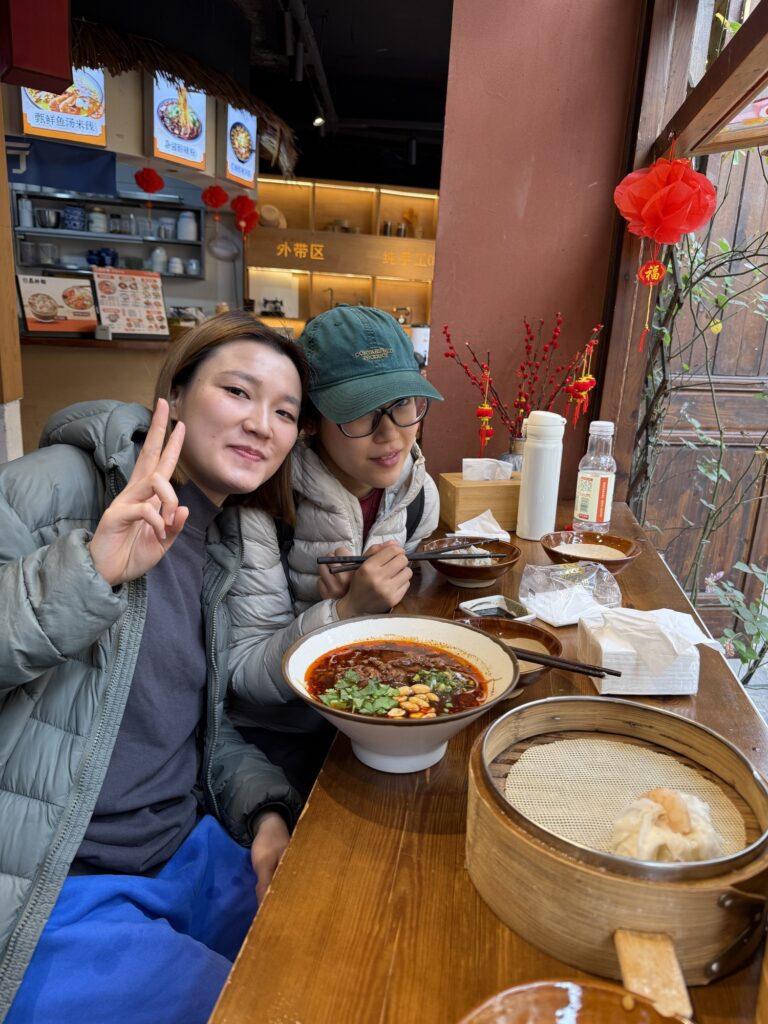
You get beneath the iceberg and see how deep the culture, the values, and the history truly run. And if you stay long enough, you might one day reach the very bottom—if such a bottom even exists.
It is not only about seeing everything beautiful and representative that appears in the light and on various visitxxx.com websites. What is truly worth approaching lies at the bottom, where the light does not reach.
Away With the Travel Program
Why do you travel?
I travel to learn and to understand. Of course, you can learn something from reading a museum sign or listening to a guide’s wise words, but there will always be a distance to what is being told. I can only speak for myself, but the only time I have managed to overcome that distance is when I throw away the travel program, remain still, and try to live and go to the places where the locals spend their time.
Suddenly, life and stories begin to swarm right in front of you. Suddenly, the lady from the street kitchen waves when I walk by, and often she comes shuffling after me with an orange she insists I eat immediately. Suddenly, I am brewing coffee in the courtyard café because I have become friends with the barista. And the little girl who watches with wide eyes every day to see what I am drawing comes over and helps with the coloring.
Suddenly I discover that the world that once felt foreign now feels comfortable approaching me, because I remain calm and exist within their everyday life. For once, they have the opportunity to gather the courage needed to approach a stranger who does not speak their language. For once, they meet a tourist who is not always on the way to the next place, and therefore signals that what is happening here and now is something worth staying in.
And who would not want to invite someone into their living room and start telling stories if that person is simply curious about who you are and where you come from? – Watch the video below and understand what I talk about:
It Is About Connections
Connections teach us to understand each other and the lives we each live. They are the root of our learning and development. Without connections, the museum sign would not exist, and the guide would not know what to say. What they share is that the knowledge they each convey has been created through a connection.
And now I have probably blown this text a bit out of proportion—so let us bring it down again.
It can all be said with a cliché: quality over quantity.
By that I mean that if I pack my backpack every day to rush on to the next beautiful view or the next gilded temple complex, everything blends together into one. It becomes meaningless. It does not stick, and you do not remember it. The truth is that this kind of experience only takes place through one-way communication. There is no exchange. You throw a ball that simply lands somewhere and rolls aimlessly into nothing.
I call them dead things. Because I do not get to play ball with them, be a part of them, and thereby allow my body to feel what on earth is actually going on in this country.
In the video below ‘A Drawing and a Dance in Wuhan’, I’ve decided to spend my time drawing and enjoying the pleasant atmosphere of cheerful Chinese people who enjoy each other’s company under the afternoon sun:
To Travel Is to Stay
Why should I know all this? you might be thinking.
But the fact is that you have read this far, and perhaps you see the same point as I do:
A journey is not about moving physically, but mentally.
If you are willing to give yourself the time to stay, the energy to understand, and the courage to look up from your phone, you create connections with the locals. Connections that make the journey meaningful—but also fun—because you are thrown into so many strange situations you never anticipated.
Connections that, I am convinced, can lead to the greatest journey you will ever embark on.
When all is said and done, as a tourist you are vulnerable in the sense that you do not know much about where you are or what you are doing. Instead of seeing this as a negative challenge, you can turn it to your advantage and use the great question mark that inevitably shines from you when you are in a foreign place. There is nothing to lose by asking the man waiting for the bus beside you for help finding the way.
Why pull your phone out of your pocket when the expert is standing right in front of you?
The truth is that once you have opened the door just a little with the locals, there is nothing they would rather do than interact with you. It is a win-win situation. And perhaps it also says something about how rare this openness toward each other has become.
In the video below, I take a train journey in Chongqing, China. At my local station, a kind staff member helps me; on the train, I meet a curious young boy, and then I see the iconic Liziba Station: